Sodium gluconate applications span food preservation, concrete admixtures, metal surface treatment, and pharmaceutical formulation, with grade selection driven by purity and heavy-metal limits set out in standards such as the FCC and USP-NF. Buyers typically choose between food, technical, and pharmaceutical grades depending on the end-use matrix and the documentation their own customers require.
What Is Sodium Gluconate
Sodium gluconate (CAS 527-07-1) is the sodium salt of gluconic acid, produced commercially by fermentation of glucose followed by neutralization. It is a white to off-white, free-flowing crystalline powder, highly soluble in water, with mild chelating and sequestering properties. Its ability to bind calcium, iron, and other polyvalent cations under neutral-to-alkaline conditions makes it useful well beyond food formulation, extending into construction chemicals and industrial cleaning.
Grades and Standards for Sodium Gluconate Applications
Sodium gluconate applications are generally segmented by grade, and the appropriate grade should match both the regulatory context and the processing conditions of the finished product. The table below summarizes the grades commonly specified across the region.
| Grade | Typical Standard | Purity (dried basis) | Common Use |
|---|---|---|---|
| Food Grade | FCC, E576 | ≥98.0% | Sequestrant, stabilizer, acidity regulator in food and beverage |
| Pharmaceutical Grade | USP-NF, EP | ≥99.0% | Excipient and chelating agent in pharmaceutical formulations |
| Technical / Industrial Grade | Internal manufacturer spec | ≥98.0% | Concrete admixture retarder, metal surface treatment, cleaning formulations |
Within each grade, buyers should confirm heavy-metal limits, loss-on-drying, and chloride content against the certificate of analysis rather than assuming equivalence between suppliers claiming the same nominal grade.
Physical Forms and Packaging
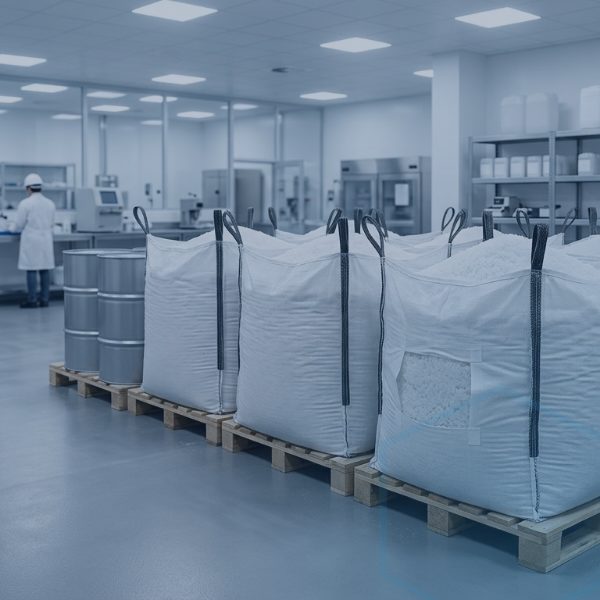
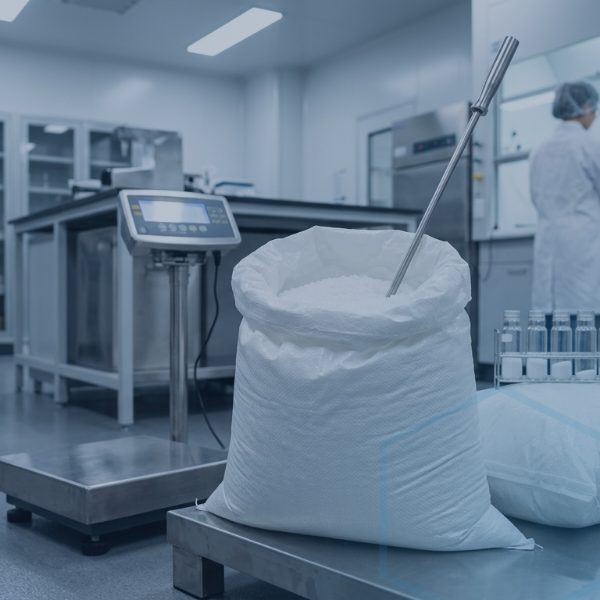
Sodium gluconate is supplied almost exclusively as a dry crystalline powder or granule; liquid concentrates exist for some industrial formulations but are less common in regional trade. Standard packaging is 25kg multi-wall paper or PP/PE bags on pallets, with bulk bag (FIBC) options available for high-volume construction or industrial buyers. Pharmaceutical-grade material is typically packed and stored under tighter environmental controls to limit moisture pickup and cross-contamination.
Formulation and Processing Notes
Sodium gluconate is highly water-soluble across a wide temperature range and remains an effective chelating agent from mildly acidic through strongly alkaline conditions, which is why it performs well in both food systems and high-pH cleaning or construction formulations. It is thermally stable under normal processing temperatures used in food and industrial manufacturing, and it does not impart significant color or odor to finished formulations at typical use levels. In concrete applications, it is valued as a set retarder and water reducer aid; in metal finishing and cleaning formulations, it functions as a sequestrant for calcium and iron to prevent scale and discoloration.
Handling and Storage
Store sodium gluconate in its original sealed packaging in a cool, dry area away from direct moisture exposure, as the powder is hygroscopic and can cake if packaging is compromised. It is non-flammable and does not require special ventilation beyond standard industrial dust control practices. Shelf life under proper storage conditions is typically several years, though buyers should rely on the manufacturer's stated retest date rather than assuming indefinite stability.
QA Documentation Buyers Should Request
For any grade, buyers should request a current certificate of analysis (COA) showing assay, pH of a standard solution, loss on drying, heavy metals, and chloride/sulfate limits, along with a technical data sheet detailing particle size and solubility behavior. Lot traceability documentation is particularly important for food and pharmaceutical-grade material, and buyers supplying regulated markets should confirm whether the specific lot carries supporting documentation for the standard it claims to meet (e.g., FCC or USP-NF compliance).
FAQ
What grades of sodium gluconate are used in food manufacturing?
Food manufacturers typically specify food-grade sodium gluconate meeting FCC criteria, generally at a minimum of 98.0% purity on a dried basis, used as a sequestrant and stabilizer.
Is sodium gluconate the same as citric acid or EDTA for chelation?
No. Sodium gluconate is a distinct chelating agent with its own solubility and pH-performance profile; it is sometimes selected over EDTA where biodegradability or specific regulatory status is preferred, but performance should be validated per formulation.
How should sodium gluconate be stored to avoid caking?
Keep it in sealed original packaging in a dry, cool environment, since the powder is hygroscopic and will absorb ambient moisture if the bag or liner is opened and not properly resealed.
How DIC Supports This
DIC stocks sodium gluconate regionally across food, technical, and pharmaceutical grades, allowing procurement teams to match the specification to the application without overpaying for unnecessary purity. Pharmaceutical-grade lots are handled through controlled warehouse conditions to preserve documentation integrity and lot traceability, and vendor-managed inventory (VMI) arrangements are available for manufacturers with continuous consumption profiles.