Vitamin E 50% CWS specifications define a cold-water-soluble powder form of vitamin E — typically dl-alpha-tocopheryl acetate encapsulated in a carbohydrate or gum matrix at 50% active potency — built so formulators can disperse vitamin E directly into aqueous systems without heating or pre-emulsifying an oil. It is the standard format used to fortify beverages, powdered drink mixes, dairy systems and infant nutrition products where a plain oil-soluble tocopherol would separate or require extra processing steps.
What Vitamin E 50% CWS Actually Is
Oil-soluble vitamin E — whether natural d-alpha-tocopherol or synthetic dl-alpha-tocopheryl acetate — does not disperse in water on its own. CWS (cold-water-soluble) grades solve this by spray-drying the oil core together with a wall material, commonly modified food starch, maltodextrin, gum arabic or gelatin, with the finished powder standardised to 50% w/w tocopherol content and the balance made up of carrier and anticaking agent (often silicon dioxide). The capsule shields the oil droplet from oxygen and light until it is hydrated, then releases a fine, stable dispersion once stirred into water.
Two chemistries circulate under this category: the synthetic, racemic dl-alpha-tocopheryl acetate (CAS 52225-20-4) and the natural d-alpha-tocopheryl acetate (CAS 7695-91-2) derived from vegetable oil distillation. The conversion most formulators work with is well established pharmacologically: 1 mg dl-alpha-tocopheryl acetate equals 1 IU, while 1 mg d-alpha-tocopheryl acetate equals approximately 1.49 IU — a potency difference worth confirming on the COA before dosing a formula, since it changes the inclusion rate needed to hit a label claim.
Grades, Standards and Form Comparison
Vitamin E acetate is covered by long-standing pharmacopoeial and food-grade monographs — USP/NF for pharmaceutical and supplement use, and Food Chemicals Codex (FCC) for food-grade material — and it carries the food additive numbers E307 (synthetic alpha-tocopherol) and E306 (mixed natural tocopherols) in regions that use the E-number system. CWS powder is one of several commercial forms; the table below sets out where each sits.
| Form | Typical Content | Solubility Behaviour | Common Use |
|---|---|---|---|
| Oil (liquid tocopheryl acetate) | >=96-98% assay | Oil-soluble only; needs emulsification | Oil-phase fortification, softgels, topical emulsions |
| Vitamin E 50% CWS powder | 50% w/w potency | Disperses in cold water via encapsulation | Beverages, powdered drink mixes, infant formula, instant foods |
| Vitamin E dry powder (non-CWS) | typically 25-50% on silica/starch carrier | Requires warm water or pre-dispersion | Tableting, capsule fill, dry blends |
| Natural d-alpha vs synthetic dl-alpha | Potency ratio ~1.49:1 | Same dispersion behaviour once encapsulated | Label claim and dosing calculations |
Formulation and Processing Notes
The encapsulating matrix is the part of the formulation that needs care on the line. Gentle, low-shear stirring hydrates the powder and releases a fine dispersion; high-shear mixing or prolonged agitation can rupture the wall material early and expose the tocopherol core to oxygen before the product is filled, leading to drift in assay over shelf life. CWS vitamin E generally holds up across a moderate pH range (roughly pH 3-7), which covers most juice, dairy and ready-to-drink beverage systems, but it is sensitive to extended high-heat processing — UHT or retort cycles run at the upper end of their time-temperature window can degrade potency, so vitamin E is usually dosed post-pasteurisation or verified by stability trial under the specific thermal profile used. Co-formulating with an antioxidant synergist, such as ascorbyl palmitate, is a standard way formulators extend shelf-life stability once the vitamin is in a finished aqueous matrix. Because the carrier can be starch-, gum- or gelatin-based, formulators working to halal, kosher or vegetarian label claims should confirm the carrier source on the spec sheet before selecting a grade — a gelatin-based CWS grade and a modified-starch CWS grade are not interchangeable for those claims even at identical tocopherol potency.
Handling, Packaging and Storage
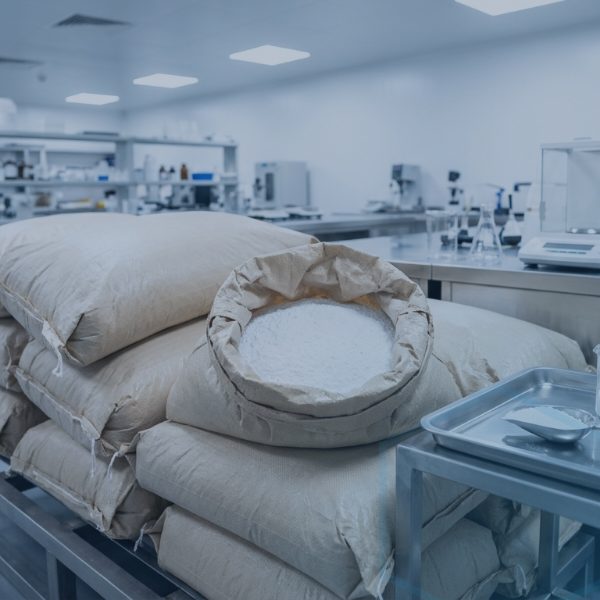
Vitamin E 50% CWS is supplied as a free-flowing powder, typically in 25 kg fibre drums or multi-wall paper bags with a polyethylene or foil inner liner to limit oxygen and moisture ingress. Because tocopherol content degrades gradually under light, heat and oxygen exposure, storage in a cool, dry, dark warehouse below ambient room temperature is standard practice, and containers should be resealed promptly after partial use to limit headspace oxygen exposure between batches. Stock rotation on a first-in-first-out basis is important given the gradual potency drift inherent to any encapsulated vitamin powder, and lot segregation helps avoid blending material of different manufacture dates into one production run.
QA Documentation to Request
A complete technical file for Vitamin E 50% CWS should include a Certificate of Analysis confirming tocopherol assay (by HPLC, expressed as % w/w or IU/g), particle size distribution, moisture/loss-on-drying, and microbiological limits (total plate count, yeast and mould, and absence of pathogens relevant to food-grade material), plus a full specification sheet detailing carrier composition, anticaking agent, and natural-versus-synthetic source. Buyers in food, beverage and infant nutrition should also request lot traceability back to the spray-drying batch, an allergen statement covering the carrier matrix, and, where relevant to the finished product's label claims, halal, kosher or non-GMO documentation for the carrier material specifically, since these attestations apply to the full powder blend, not just the tocopherol fraction.
Sourcing Considerations
Natural d-alpha-tocopheryl acetate is derived from vegetable oil deodoriser distillate (commonly soy, sunflower or rapeseed byproduct streams), while synthetic dl-alpha-tocopheryl acetate is produced by chemical synthesis; the underlying oil feedstock used for the natural form can vary by region and season, which is a normal characteristic of a plant-derived raw material rather than a market event. Formulators should confirm which chemistry a given lot uses, since it affects both the IU conversion used for label dosing and allergen/non-GMO documentation if the feedstock oil is soy- or rapeseed-derived.
FAQ
What is Vitamin E 50% CWS used for in beverage manufacturing?
It is used to add vitamin E to water-based systems — juices, dairy drinks, powdered drink mixes and infant formula — where the encapsulated 50% powder disperses in cold water without the pre-emulsification an oil-soluble tocopherol would need.
What is the difference between Vitamin E 50% CWS and oil-soluble vitamin E?
Oil-soluble tocopheryl acetate is a liquid that needs an oil phase or emulsifier system to disperse in water; CWS powder is the same active encapsulated in a carbohydrate or gum matrix at a standardised 50% potency so it hydrates directly in cold aqueous systems.
What documentation should I request when sourcing Vitamin E 50% CWS?
A Certificate of Analysis with tocopherol assay, particle size and microbiological data, a specification sheet identifying the carrier matrix and natural-versus-synthetic source, lot traceability, and, where relevant, halal/kosher/allergen statements covering the carrier.
How we grow with you
DIC stocks Vitamin E 50% CWS regionally across grade options — natural and synthetic tocopheryl acetate, different carrier matrices for halal, kosher or allergen-sensitive formulations — so a product launch is not dependent on a single incoming shipment. Sensitive vitamin grades are held in pharma-grade, climate-controlled warehousing, and VMI arrangements let manufacturers carry less buffer stock on their own site while DIC manages replenishment against actual consumption.