L-Tryptophan grades fall into three practical tiers for buyers: feed grade for animal nutrition, food/FCC grade for human food fortification, and USP/Ph.Eur. pharmaceutical grade for nutraceutical and pharmaceutical formulations — the difference lies in assay purity, impurity limits, and the documentation package behind each lot, not in the core chemistry of the molecule itself.
What Is L-Tryptophan?
L-Tryptophan (CAS 73-22-3) is an essential amino acid, meaning it cannot be synthesized by humans or most livestock species and must be supplied through diet or formulated nutrition. Commercially, it is produced by microbial fermentation of a carbohydrate feedstock using selected bacterial strains, followed by isolation, crystallization, and drying. The result is a white to off-white crystalline powder with a faintly bitter taste, moderate water solubility (roughly 11-13 g/L at 25°C), and a melting point near 290°C accompanied by decomposition rather than a clean melt. Aqueous solutions typically sit in a pH range of about 5.5-7.0, which is a useful reference point when formulating into liquid or semi-liquid matrices.
In formulation terms, L-Tryptophan functions as a building block for protein synthesis and as a component of balanced amino acid profiles in feed and nutrition systems. This article addresses ingredient function and handling only; it does not make claims about finished-product health outcomes.
L-Tryptophan Grades and the Standards That Define Them
Grade selection should be driven by the regulatory pathway of the finished product and the impurity tolerance of the process. Feed-grade material is produced to meet animal nutrition specifications and is typically the most cost-efficient tier for bulk inclusion in premixes. Food-grade material aligns with Food Chemicals Codex (FCC) expectations for human food use. Pharmaceutical-grade material is manufactured and tested against USP or Ph.Eur. monograph requirements, with tighter control on assay, heavy metals, and microbial limits, and is the appropriate choice for capsules, tablets, and other dosage forms.
| Grade | Typical Standard Reference | Assay (dried basis) | Primary Use |
|---|---|---|---|
| Feed grade | Feed-industry amino acid specifications | ~98.0% minimum | Swine and poultry diet amino acid balancing |
| Food grade | FCC | ~98.5%-101.5% | Food and beverage fortification |
| Pharmaceutical grade | USP / Ph.Eur. | ~98.5%-101.5% | Nutraceutical and pharmaceutical dosage forms |
Always request the current certificate of analysis (COA) for the specific lot rather than relying on nominal grade labels, since acceptable ranges and test methods are monograph-specific and can differ slightly between pharmacopeias.
Formulation and Processing Notes
L-Tryptophan's limited aqueous solubility means that liquid formulations — oral solutions, beverage fortification, or liquid feed supplements — often require elevated temperature, pH adjustment within a compatible range, or co-solvents to achieve full dissolution without residual sediment. In dry blending for feed premixes or dry nutraceutical mixes, particle size and bulk density of the chosen lot affect flow and segregation in the final blend, so it is worth confirming particle size distribution against your existing premix matrix before switching suppliers.
Thermal stability is generally adequate for standard feed pelleting and most food processing steps, but prolonged exposure to high heat combined with moisture and reducing sugars can promote Maillard-type browning reactions common to amino acids in general. Where a process involves extended heat-moisture exposure (extrusion, retort, prolonged drying), it is good practice to validate recovery of the amino acid at the end of the process rather than assume full retention from the raw material assay alone.
Handling, Storage, and QA Documentation
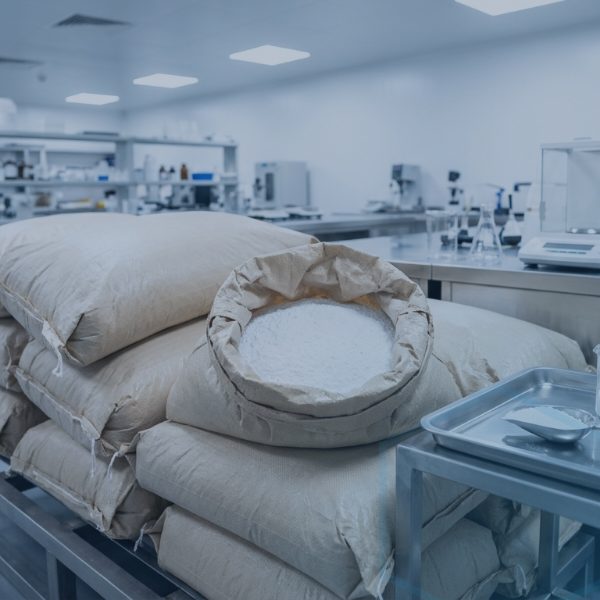
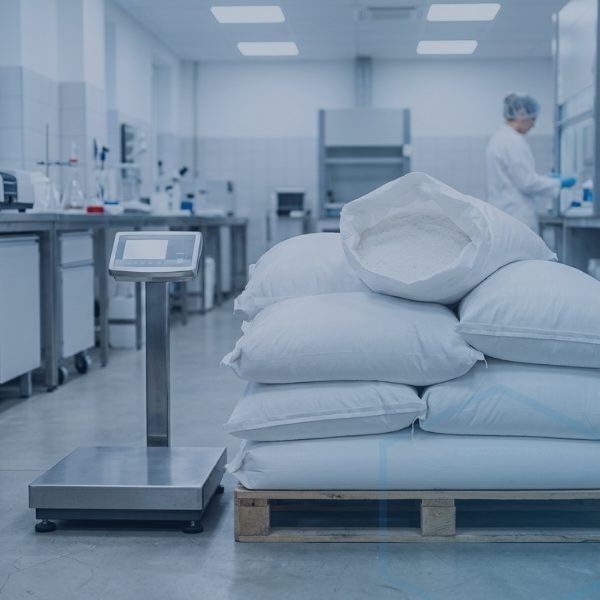
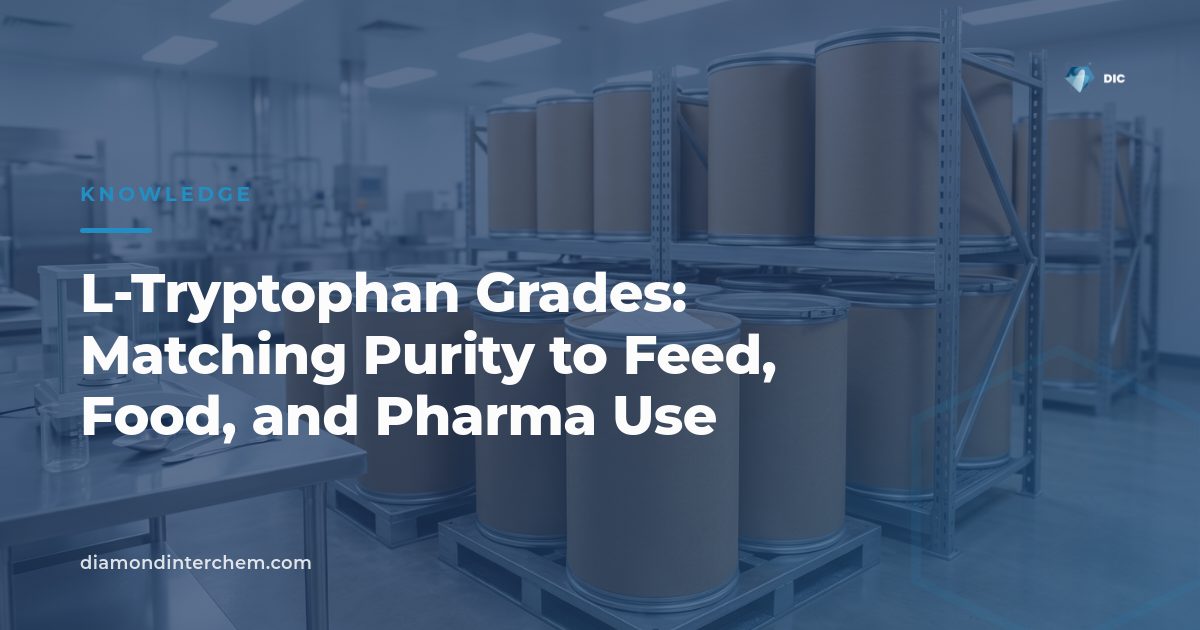
L-Tryptophan is typically supplied in 25 kg fiber drums or multiwall paper bags with a polyethylene liner for food and pharma grades, and in bulk bags for larger feed-grade volumes. The material is mildly hygroscopic and can discolor under prolonged light or heat exposure, so storage in a cool, dry area away from direct sunlight, with containers kept sealed between uses, preserves both appearance and assay over the shelf life.
For incoming QA, buyers should request a certificate of analysis specific to the delivered lot, a technical spec sheet defining assay, heavy metal, and microbial limits, and lot traceability back to the fermentation and purification batch. For pharmaceutical or infant-nutrition applications, confirmation of the applicable pharmacopeial compliance (USP/Ph.Eur.) and any relevant allergen or non-GMO statements should be part of the standard documentation request, not a special case.
Sourcing Considerations
Because L-Tryptophan is produced via fermentation rather than extraction, output is not subject to agricultural seasonality in the way plant-derived amino acids can be. The practical sourcing consideration is production concentration: fermentation-based amino acid manufacturing is concentrated among a relatively small number of global producers, which makes supplier qualification, dual-sourcing, and consistent lot-to-lot documentation more important than for commodity raw materials with many regional producers.
FAQ
What grades of L-Tryptophan are used in animal feed formulations?
Feed-grade L-Tryptophan, specified against feed-industry amino acid standards, is the standard choice for swine and poultry diets where it is used to balance the overall amino acid profile of the ration.
Is L-Tryptophan soluble in water?
It has moderate water solubility, roughly 11-13 g/L at 25°C, which is generally sufficient for dry blending but may require temperature or pH adjustment for full dissolution in liquid formulations.
What purity should I specify for pharmaceutical or nutraceutical use?
Pharmaceutical and nutraceutical formulations typically call for USP or Ph.Eur. grade material, with assay and impurity limits defined by the relevant monograph and confirmed on the lot-specific certificate of analysis.
How we grow with you
L-Tryptophan supply shouldn't put a product launch at the mercy of a single shipment. We stock L-Tryptophan regionally across feed, food, and pharmaceutical-grade options, so formulators can qualify the grade that matches their regulatory pathway without waiting on a long-haul import cycle. Sensitive grades move through pharma-grade warehousing, and VMI arrangements let manufacturers carry less buffer stock on their own floor while we carry it for them.