Vitamin B12 cyanocobalamin grades differ mainly in concentration, dilution carrier, and the standard they are tested against: USP-NF and Food Chemicals Codex (FCC) monographs cover pharmaceutical and food-grade material, while diluted "trituration" powders (0.1%, 1%, 2% active) on carriers such as mannitol or dicalcium phosphate are the practical form most manufacturers actually weigh into a premix or tablet blend. Choosing the right grade and dilution up front avoids rework at the blending stage and keeps assay results inside spec through shelf life.
What cyanocobalamin is and how it is made
Cyanocobalamin (CAS 68-19-9, molecular formula C63H88CoN14O14P) is the cyano-ligated, stable form of vitamin B12 used across food, feed, and pharmaceutical manufacturing. It is a dark red crystalline compound produced industrially by microbial fermentation, most commonly using strains of Pseudomonas denitrificans or Propionibacterium species, followed by extraction, purification, and crystallization. Because fermentation-based production is concentrated among a limited number of specialized manufacturers globally, buyers typically qualify more than one approved source and keep a second supplier on file rather than single-sourcing a vitamin that sits on a critical fortification or formulation path.
Vitamin B12 cyanocobalamin grades and how they compare
The table below summarizes the grades and dilutions most commonly specified by procurement and R&D teams. Pure crystalline material is rarely weighed directly into a production batch given the microgram-level dosing involved; trituration grades exist specifically to make handling and weighing practical on standard plant equipment.
| Grade / form | Typical assay | Standard referenced | Common use |
|---|---|---|---|
| USP/FCC crystalline powder | ≥96.0% (USP) / ≥95.0% (FCC) cyanocobalamin | USP-NF, FCC | Pharmaceutical formulation, master batching, re-dilution |
| 0.1% WS (water-soluble) trituration | 0.1% active on mannitol/starch carrier | Supplier spec sheet referencing USP/FCC assay method | Liquid supplements, beverage premixes, injectable dilution stock |
| 1% trituration (powder) | 1.0% active, typically on dicalcium phosphate or mannitol | Supplier spec sheet | Tablet, capsule, and gummy premixes; feed premixes |
| Feed-grade premix | 0.1%-1% active, carrier varies by species application | Regional feed additive registration | Poultry, swine, and aquaculture feed premixes |
Physical form, packaging, and stability
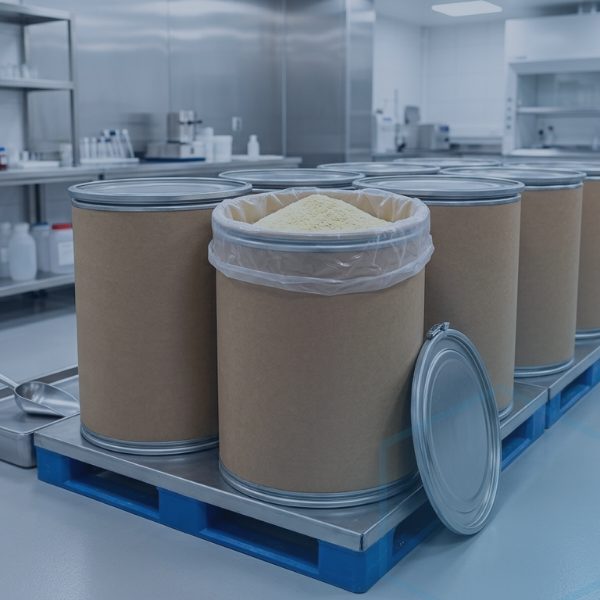
Crystalline cyanocobalamin and its triturations are supplied as fine powders, typically packed in fiber drums or multi-ply paper bags with a light-blocking, moisture-resistant polyethylene liner — standard net weights run from 1-25 kg for concentrated material and up to 25 kg for diluted trituration powders used in bulk premix production. Cyanocobalamin is freely soluble in water and sparingly soluble in alcohol. Its main formulation vulnerability is light: the cobalt-corrin ring is photolabile, so prolonged exposure to UV or even bright ambient light degrades assay over time. It is most stable in slightly acidic solution (roughly pH 4-6) and is more sensitive to degradation in strongly acidic or alkaline conditions, and in the presence of reducing agents such as ascorbic acid or sulfites, or trace heavy metal catalysts, especially when light is also present. Properly protected from light and moisture, cyanocobalamin is reasonably heat-stable through normal pasteurization, extrusion, and tableting conditions, which is why most commercial fortification programs rely on it rather than the more heat- and light-sensitive methylcobalamin.
Applications across food, feed, and pharma
Formulators use cyanocobalamin wherever vitamin B12 needs to be added back into a product that does not naturally contain it or where a product requires fortification labeling. Typical applications include fortified infant formula and breakfast cereals, nutrient-fortified beverages and dairy alternatives, multivitamin tablets, capsules, and gummies, and injectable or oral pharmaceutical preparations. In animal nutrition, cyanocobalamin is a standard component of premixes for poultry, swine, and aquaculture feed formulations. Across all of these, the ingredient's role is strictly functional — supplying a defined, labeled amount of vitamin B12 to the finished formulation — and finished-product claims remain the responsibility of the brand owner and its regulatory affairs team.
Formulation, handling, and QA documentation
On the processing line, the main practical considerations are protecting the material from light during storage and in-process handling (opaque or amber containers, minimizing open-air transfer time), controlling moisture pickup given the powder's hygroscopic tendency, and sequencing addition to avoid prolonged contact with strong reducing agents or acidic/alkaline process streams before the final blend is stabilized. Recommended storage is a cool, dry area protected from direct light; some concentrated or injectable-grade material carries a refrigerated storage recommendation, so the supplier spec sheet should always be checked before setting warehouse conditions. When qualifying a lot, buyers should request a certificate of analysis showing assay by HPLC or UV-spectrophotometric method against the referenced USP/FCC monograph, heavy metals and microbial limits, particle size distribution for trituration grades, moisture content, and full lot traceability back to the fermentation batch. Non-GMO, kosher, and halal certificates are commonly requested alongside the COA depending on the finished-product category.
FAQ
What grades of vitamin B12 cyanocobalamin are used in food and supplement manufacturing?
Food and supplement manufacturers typically use FCC or USP-grade crystalline cyanocobalamin re-diluted into 0.1%, 1%, or 2% trituration powders on carriers like mannitol or dicalcium phosphate, which make microgram-level dosing practical on standard blending and tableting equipment.
Why does vitamin B12 cyanocobalamin need light-protective packaging?
The cobalt-corrin structure in cyanocobalamin is photolabile, meaning it degrades on exposure to UV and bright visible light. Suppliers package it in opaque, moisture-resistant liners and recommend storage away from direct light to preserve assay through shelf life.
Can cyanocobalamin withstand standard food processing heat?
When protected from light and excess moisture, cyanocobalamin generally tolerates normal pasteurization, extrusion, and baking temperatures reasonably well, though prolonged high heat combined with reducing sugars or strongly acidic/alkaline conditions can reduce assay, so process validation on the specific formulation is recommended.
How we grow with you
We stock vitamin B12 cyanocobalamin regionally across USP/FCC and feed-grade options so a product launch or reformulation is not hostage to a single shipment lead time. Concentrated and diluted trituration grades are held separately, and sensitive lots move through pharma-grade, light-controlled warehouse space rather than general ambient storage. For manufacturers running continuous fortification or premix lines, VMI arrangements carry the buffer stock so your team is not managing safety-stock math on a microgram-dosed ingredient.