Asia-US container rates edged higher again this week and remain near their highest level since mid-2022, driven by congestion at East Asian ports that has left more than 4.3 million TEU waiting to berth globally, according to shipping market intelligence firm Linerlytica. For procurement teams in Southeast Asia, the transpacific number is really a proxy for something closer to home: the same vessel bunching, berth delays and equipment shortages that push US-bound rates up are also squeezing the intra-Asia and SEA-bound capacity that chemical, food-ingredient and personal-care shipments depend on.
This article unpacks why the congestion is happening, what it does to lead times and freight cost pass-through for manufacturers across F&B, personal care, pharma, supplements, pet nutrition and electronics, and what a practical monitoring routine looks like for a procurement or supply-chain team that doesn't have a dedicated freight desk.
Why Are Asia-US Container Rates Rising Again?
Container freight is a network problem before it is a pricing problem. When berths at major East Asian load ports back up — from a mix of import surges, labor and yard capacity limits, and carriers bunching sailings to protect schedule reliability — vessels queue offshore instead of loading and discharging on time. Linerlytica's figure of 4.3 million TEU waiting to berth globally is a scale marker: that is capacity sitting idle in queues rather than moving cargo, and it is concentrated in East Asia. Carriers respond by blanking sailings, skipping port calls, or reallocating tonnage toward the highest-yielding routes — which right now is transpacific eastbound to the US. That reallocation is exactly why the headline rate keeps climbing even without a demand shock: it is a capacity-allocation story, not (only) a demand story.
What Port Congestion Means for Southeast Asian Manufacturers
The knock-on effects differ by segment, but the mechanism is the same: less available slot capacity and less predictable transit time.
- Food & beverage manufacturers importing functional ingredients, hydrocolloids or acidulants face wider variance in arrival dates for the same nominal transit time, which stresses production planning built around tight reorder points.
- Personal care formulators sourcing specialty surfactants or actives see the same variance compounded by smaller lot sizes, which are the first to lose priority when carriers ration space toward larger contracted shippers.
- Pharma and supplements buyers working with temperature-sensitive or documentation-heavy cargo absorb the congestion twice — once in transit delay, once in the compliance risk of a shipment sitting in a congested yard longer than planned.
- Electronics and semiconductor-grade material buyers tend to run leaner buffers given cost and shelf-life pressure, so even a one- to two-week slip in transit has an outsized effect on production scheduling.
How Elevated Asia-US Container Rates Ripple Into SEA-Bound Freight
The link from Asia-US container rates to SEA-bound freight is capacity substitution. Container shipping lines operate shared vessel and equipment pools across trades. When the transpacific lane pays more per box and congestion makes schedules unreliable, carriers prioritize repositioning empty containers and allocating slots toward the routes generating the best return and the least berth-queue risk. Intra-Asia and Asia-SEA feeder services, which are typically lower-yield and higher-frequency, absorb the residual disruption: fewer available slots, more rolled cargo, and longer dwell times at transshipment hubs. For chemical shipments specifically, this pressure lands hardest on ISO-tank allocations, which are already tightly held by a small number of operators — congestion doesn't create that scarcity, but it amplifies it, because tank operators reposition assets toward the trades where turnaround is fastest and most predictable.
Comparing Freight Options Under Congestion Pressure
| Mode | Typical use case | Exposure to port congestion | Flexibility for smaller lots |
|---|---|---|---|
| ISO-tank (bulk liquid) | Large-volume liquid chemical imports | High — asset pool is small and tightly held; congestion delays turnaround further | Low — generally requires higher committed volumes |
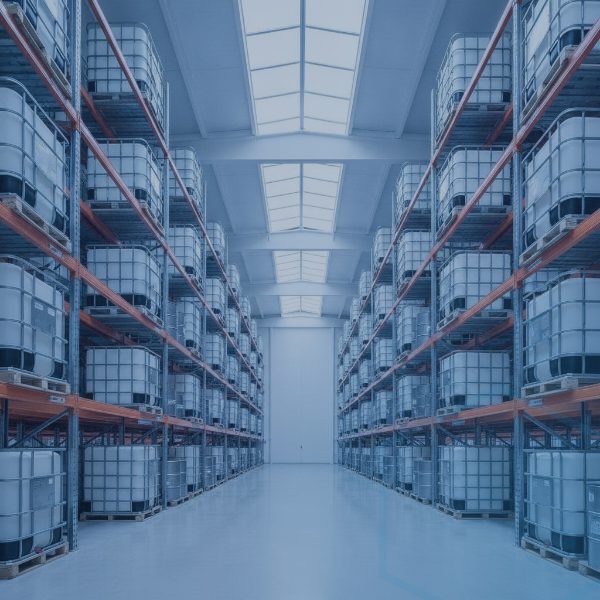
| IBC drum / flexi-tank in standard container | Mid-volume liquid and solid chemical shipments | Moderate — rides standard container capacity, subject to the same slot rationing but not tank-specific scarcity | Higher — works with smaller, more frequent lot sizes |
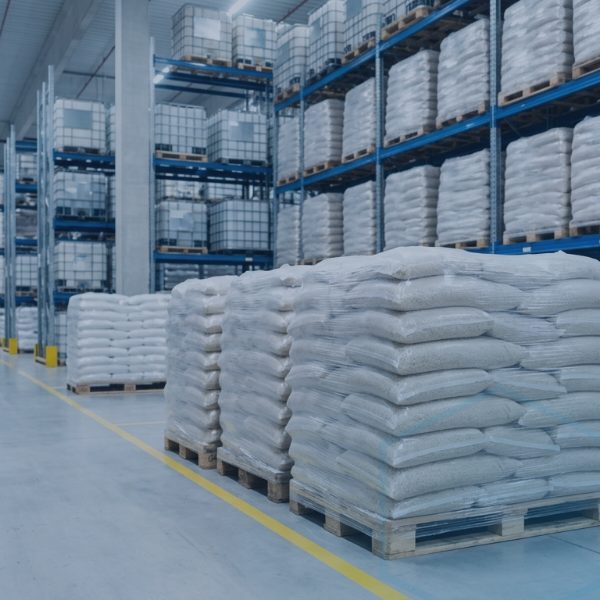
| Standard dry container (drummed/bagged solids) | Powders, granules, packaged specialty ingredients | Moderate — same slot competition as general cargo | High — smallest practical lot sizes |
None of these options is immune to port congestion, but the degree of exposure differs, and the practical implication is diversification: buyers who can split volume across more than one mode, or who work with a supplier that already runs an alternate logistics channel, have more room to absorb a bad congestion week without a production stoppage.
Monitoring and Action Checklist for Procurement Teams
- Track a public freight index (Linerlytica, Freightos, or a carrier's own service advisories) monthly, not just when a shipment is already late.
- Ask suppliers for the actual port of loading and known congestion status before confirming a shipment date, not after booking.
- Build safety stock sizing around a realistic worst-case transit variance, not the nominal transit time on a rate sheet.
- Diversify port of loading and, where feasible, freight mode (ISO-tank vs. IBC drum vs. standard container) so a single bottleneck cannot stop the whole supply line.
- Review force majeure and delay-notification clauses with suppliers before the next peak season, not during it.
- Where volumes justify it, discuss a vendor-managed inventory (VMI) arrangement that shifts some of the buffer-holding responsibility upstream.
FAQ
Why are Asia-US container rates still elevated in 2026?
Per Linerlytica, congestion at East Asian ports has left more than 4.3 million TEU waiting to berth globally, prompting carriers to blank sailings and reallocate capacity toward higher-yield transpacific routes, which keeps rates near their highest level since mid-2022.
How does East Asian port congestion affect chemical shipments to Southeast Asia?
Carriers under congestion pressure prioritize the most profitable, most predictable trades first. Intra-Asia and SEA-bound feeder capacity — including the already-scarce ISO-tank pool used for bulk liquid chemicals — absorbs a disproportionate share of the resulting delays and slot rationing.
Should manufacturers hold larger safety stock during freight volatility?
Sizing buffer stock to realistic transit variance, rather than nominal transit time, is a reasonable response to sustained congestion. The right buffer level depends on the material's shelf life, criticality to production, and how easily volume can be split across alternate freight modes or ports of loading.
How DIC supports this
Diamond Interchem's logistics model is built around not being dependent on a single, monopolized capacity pool. Our IBC drum channel gives customers an alternative to the tightly-held ISO-tank market for many liquid chemical imports, which matters most exactly when tank allocations get scarcer during congestion cycles like this one. Combined with our VMI programs and a dedicated pharma-grade warehouse for buffer stock, this lets us absorb some of the schedule variance on behalf of customers rather than passing every delay straight through to their production line. If freight volatility is complicating your supply planning, our team is glad to talk through what a buffer or dual-mode sourcing setup could look like for your specific material.