Potassium nitrate grades fall into three practical categories — food grade (E252/FCC), technical grade, and fertilizer grade — distinguished by assay, chloride and heavy-metal limits, and particle form, with the correct choice depending on whether the application is food curing, industrial processing, or soil nutrition. Buyers should match the grade to the regulatory and process requirements of the end use rather than assume interchangeability.
What Is Potassium Nitrate?
Potassium nitrate (KNO3, CAS 7757-79-1) is an inorganic salt combining a potassium cation with a nitrate anion. It occurs as a white crystalline solid, commonly supplied as fine powder, granules, or prills depending on the intended use. It is highly soluble in water, with solubility rising sharply as temperature increases, and it is a strong oxidizer — a property that governs both its industrial applications and its handling requirements. It is not combustible itself but will intensify the burning of combustible materials.
Potassium Nitrate Grades and Specifications
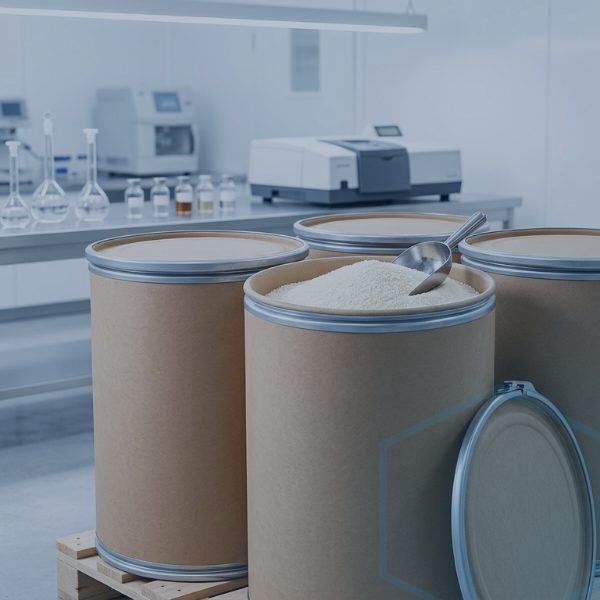
Understanding potassium nitrate grades starts with recognizing that the same molecule is manufactured to different purity and impurity-control profiles for different industries. Food-grade material is manufactured and tested to meet food additive requirements (EU additive number E252, commonly referenced against Food Chemicals Codex monographs), with tight limits on heavy metals and arsenic. Technical grade targets industrial processes such as metal heat treatment and glass manufacturing, where assay and insoluble matter matter more than trace-metal food limits. Fertilizer grade is optimized for nitrogen and potassium content and granule consistency for spreading equipment, generally marketed under the nutrient designation 13-0-44.
| Grade | Typical Assay (KNO3) | Typical Form | Primary Reference | Common Use |
|---|---|---|---|---|
| Food Grade | ≥99.0% | Fine crystalline powder | FCC monograph / EU E252 | Meat curing, food processing |
| Technical Grade | ≥98.0-99.0% | Crystals or powder | Internal technical spec | Heat treatment salts, glass tempering, pyrotechnics |
| Fertilizer Grade | ≥99.0% (as NOP 13-0-44) | Granules / prills | Fertilizer nutrient labeling | Soil and foliar nitrogen-potassium nutrition |
Applications Across Industries
Fertilizer use accounts for a large share of global potassium nitrate consumption, valued as a chloride-free source of both nitrogen and potassium for crops sensitive to chloride accumulation. In food processing, potassium nitrate functions as a curing agent, typically alongside sodium nitrite, in traditional cured meat and some cheese formulations, where its role is strictly functional as a preservative and color-fixing agent rather than a nutritional additive. Industrially, potassium nitrate is a key component of molten salt baths used for metal heat treatment (tempering and annealing) because of its stable thermal behavior at elevated temperatures, and it is used in glass manufacturing for ion-exchange strengthening processes. It also appears as an oxidizer in pyrotechnic and match formulations, and in some oral care formulations as a potassium-ion source, purely as a functional ingredient.
Formulation and Handling Notes
Potassium nitrate is freely soluble in water with solubility increasing markedly with temperature, which is relevant for both food brine preparation and fertilizer solution blending. It is chemically stable under normal storage conditions but, as a strong oxidizer, must be kept away from combustible materials, reducing agents, organic matter, and sulfur-containing compounds, since mixtures can become fire or explosion hazards under heat or friction. It is non-flammable on its own but will support and accelerate combustion of other materials. Powder and granular forms should be kept dry, as moisture pickup can cause caking and affect metering accuracy in both food and fertilizer dosing systems.
Handling, Storage and Packaging
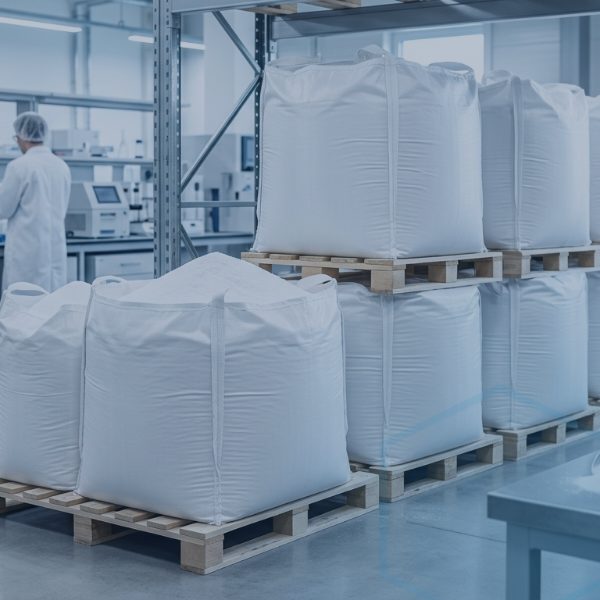
Standard commercial packaging for potassium nitrate is 25kg PP or PE bags for powder and crystalline grades, with bulk bags (500-1,000kg) commonly used for fertilizer-grade granules moving in larger volumes. Storage areas should be cool, dry, well-ventilated, and physically separated from flammable or combustible materials, acids, and reducing agents, in line with its classification as an oxidizing solid. Stock rotation (first-in, first-out) is good practice to avoid prolonged exposure to humidity, which can affect flow properties and caking in powder and granular forms.
QA Documentation to Request
Buyers should request a Certificate of Analysis (COA) confirming assay by titration, chloride content, heavy metals, and moisture; a current specification sheet defining particle size and physical form; a Safety Data Sheet (SDS) covering its oxidizer classification; and lot traceability documentation, particularly for food-grade material where curing agent usage is subject to regulatory limits in finished products. For fertilizer-grade material, nutrient content labeling consistent with the declared NPK analysis should also be confirmed.
Sourcing Considerations
Potassium nitrate is produced synthetically, most commonly via reaction of potassium chloride with nitric acid or through double-decomposition routes with sodium nitrate, so supply is not tied to a single raw material deposit the way some historical saltpeter sources were. Because food, technical, and fertilizer grades differ in purity controls and testing regimes, buyers should confirm which grade a supplier is quoting rather than assuming a single generic product covers all use cases, and should verify grade-specific documentation before specifying it into a regulated food or pharmaceutical process.
FAQ
What grade of potassium nitrate is used in food processing?
Food-grade potassium nitrate, manufactured to meet additive requirements referenced as E252 and commonly benchmarked against Food Chemicals Codex specifications, is used as a curing agent in food processing, with tight control on heavy metals and arsenic content.
Is potassium nitrate the same as saltpeter?
Yes, potassium nitrate is the chemical commonly historically referred to as saltpeter, though today it is manufactured synthetically to defined purity grades rather than sourced from natural deposits.
How should potassium nitrate be stored?
It should be stored in a cool, dry, well-ventilated area, kept dry to prevent caking, and physically separated from combustible materials, reducing agents, and organic matter because of its oxidizing properties.
How DIC Supports This
DIC stocks potassium nitrate regionally across food, technical, and fertilizer grades, with documentation packages (COA, SDS, specification sheets) available to match each grade's intended regulatory use. Sensitive food-grade lots are handled through controlled warehouse conditions, and vendor-managed inventory (VMI) arrangements are available for customers with recurring volume needs across formulation or production sites.