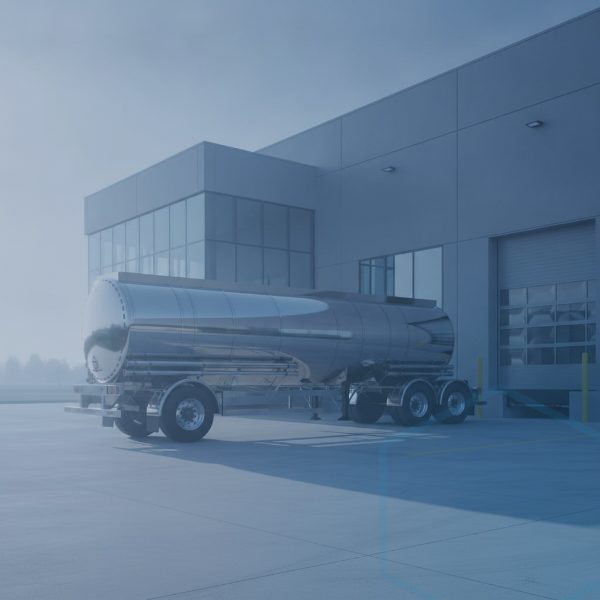
Container liquid tanker rates moved in opposite directions this week: Asia-US container freight was largely stable while liquid chemical tanker rates ex-US Gulf firmed from steady to higher, according to Hellenic Shipping News. For procurement teams sourcing specialty and commodity chemicals into Southeast Asia, that split is a useful reminder that box freight and liquid bulk freight are two different markets, driven by different vessels, different charterers, and different demand cycles — and tracking only one of them gives an incomplete picture of landed cost risk.
Specifically, container rates to the US West Coast edged higher on the low end, landing in a $7,540-8,340 per FEU (40-foot equivalent unit) range, while East Coast container rates eased slightly. Over the same period, liquid chemical tanker rates out of the US Gulf held steady to higher, rather than softening in line with containers. That divergence is the core signal worth unpacking for anyone planning imports, whether the cargo moves in a box or in an ISO tank.
Background: Why Container and Liquid Tanker Markets Move Differently
Container shipping and liquid chemical tanker shipping share ports and sometimes share routes, but they are structurally separate markets. Containers move general cargo — including packaged and drummed chemicals — on scheduled liner services operated by a small number of global carriers (Maersk, MSC, CMA CGM, and similar). Rates respond mainly to available slot capacity on a given string, blank sailings, and overall trade-lane demand for finished goods, electronics, and retail inventory restocking.
Liquid chemical tankers — the parcel tankers and larger chemical carriers that move bulk liquids in segregated tanks, plus the ISO-tank containers that piggyback on container vessels — serve a narrower, more specialized fleet. Capacity additions are slower (purpose-built tankers take years to order and deliver), and the commodities involved — base chemicals, solvents, intermediates — track industrial production and feedstock economics more directly than consumer trade does. That is why liquid tanker rates can firm even when container box rates are flat or falling: the two fleets respond to different fundamentals, and a glut of container capacity does nothing to relieve tightness in chemical tanker tonnage.
This Week's Numbers: Container Liquid Tanker Rates in Detail
- Asia-US West Coast container rates: edged higher at the low end, now bracketed at $7,540-8,340/FEU, per Hellenic Shipping News.
- Asia-US East Coast container rates: fell slightly over the same period.
- Liquid chemical tanker rates ex-US Gulf: described as steady to higher — i.e., no softening, and some lanes firming.
None of these figures are DIC's own freight costs or quoted prices; they are third-party market data reported by Hellenic Shipping News, cited here for context on broader freight conditions affecting chemical importers across the region.
What This Means for SEA Buyers, Segment by Segment
The practical implications differ by how a buyer's raw materials typically travel:
- Food & beverage manufacturers importing drummed or bagged functional ingredients (hydrocolloids, acidulants, preservatives) are more exposed to container-rate trends — a flat-to-softer Asia-US container market is broadly favorable, though Asia-SEA intra-regional container rates don't always move in lockstep with Asia-US lanes and should be checked separately.
- Personal care and pharma manufacturers sourcing bulk liquid actives or solvents via ISO tank are more exposed to the liquid tanker side of the market — where this week's data points to firming, not easing, conditions.
- Supplement and pet nutrition producers often blend both modes (bulk actives plus packaged excipients), meaning total landed freight cost depends on the mix of container and tanker-moved inputs in a given formulation.
- Electronics and semiconductor manufacturers importing electronic-grade solvents and specialty gases in ISO tanks or drums should weight the liquid tanker trend more heavily than the headline container number, since that's the segment of the freight market actually carrying their inputs.
Container vs. Liquid Tanker Freight: A Quick Comparison
| Characteristic | Container (FEU) | Liquid Chemical Tanker / ISO Tank |
|---|---|---|
| Typical cargo | Packaged/drummed chemicals, finished goods | Bulk liquids, solvents, base chemicals |
| Rate basis | Per FEU, scheduled liner service | Per tonne or per ISO-tank movement, parcel/charter basis |
| Main rate drivers | Slot capacity, blank sailings, retail demand | Fleet tonnage, feedstock/industrial demand, chartering |
| Capacity response time | Faster (redeployable vessels) | Slower (purpose-built fleet) |
| Relevant SEA buyer segments | F&B, personal care (packaged inputs) | Pharma, personal care actives, electronics, bulk chemical buyers |
Monitoring and Action Checklist
- Track container and liquid tanker rate series separately — don't assume one implies the other.
- For bulk-liquid imports, ask suppliers whether their logistics plan depends on ISO-tank slots, which remain a tighter, more concentrated market than general container capacity.
- Build buffer stock or VMI arrangements for inputs that move via liquid tanker, given slower capacity response in that fleet.
- Re-check East Coast vs. West Coast container routing if your supply chain has flexibility — this week's data shows the two US coasts diverging.
- Request logistics-mode detail (container vs. tanker vs. drum/IBC) from suppliers as part of standard quarterly supply reviews, not just unit pricing.
FAQ
Why are liquid chemical tanker rates rising while container rates stay flat?
Because they are different fleets responding to different fundamentals — container capacity is more flexible and tracks general trade volume, while chemical tanker tonnage is more constrained and tracks industrial/feedstock demand more directly.
How do container liquid tanker rates affect chemical import costs into Southeast Asia?
Asia-US lane data is a useful proxy for global freight sentiment, but SEA-bound costs depend on regional routing, ISO-tank availability, and whether a given input moves as bulk liquid or packaged cargo — all of which should be checked against the specific trade lane rather than assumed from US-bound rates alone.
What's the difference between FEU container rates and chemical tanker freight?
FEU rates price a standard 40-foot container slot on a scheduled liner service; chemical tanker freight prices bulk-liquid carriage in a segregated tank, typically on a per-tonne or per-parcel basis, and is set by a much smaller, more specialized fleet.
How DIC supports this
DIC's import and distribution model is built around the reality that container and liquid tanker markets move independently. Our IBC drum channel gives customers an alternative to the often-monopolized ISO-tank logistics route for bulk liquid chemicals, reducing single-point exposure when tanker capacity tightens. Combined with VMI programs and an isolated pharma-grade warehouse in Bangkok, this lets manufacturers in food & beverage, personal care, pharma, supplements, pet nutrition, and electronics plan buffer stock around freight-mode risk rather than reacting to it after the fact. If your team wants to review how your current import mix is exposed to container versus liquid tanker rate movements, our logistics team is available through our contact form.